Qianli Apollo Interstellar One Multifunktions-Wiederherstellungs-Erkennungsgerät (Internationale Version) für iPhone 11/11 Pro Max/11 Pro/X/XS/XS Max/XR/8/8 Plus/7/7 Plus, Wiederherstellungs-Erkennung
Verfügbarkeit für Abholungen konnte nicht geladen werden
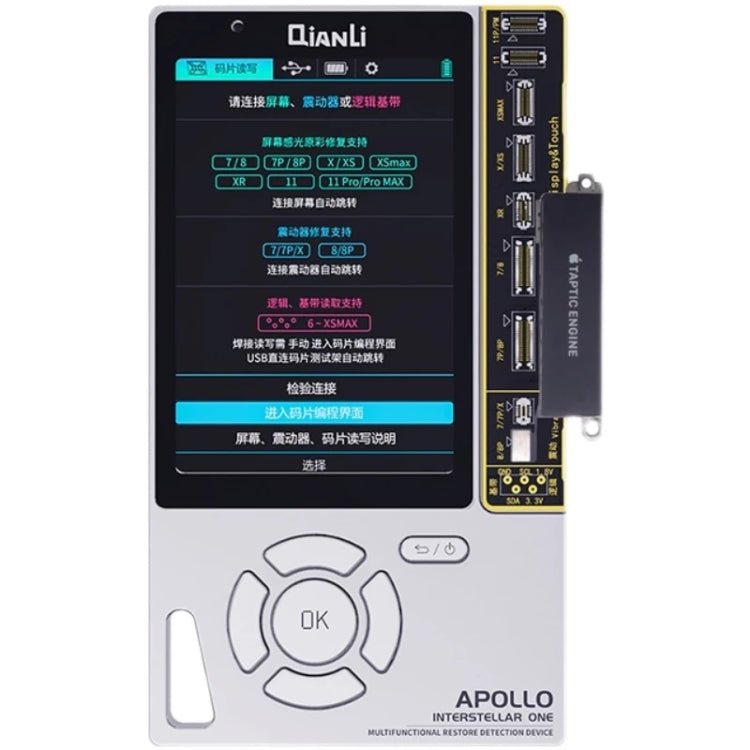
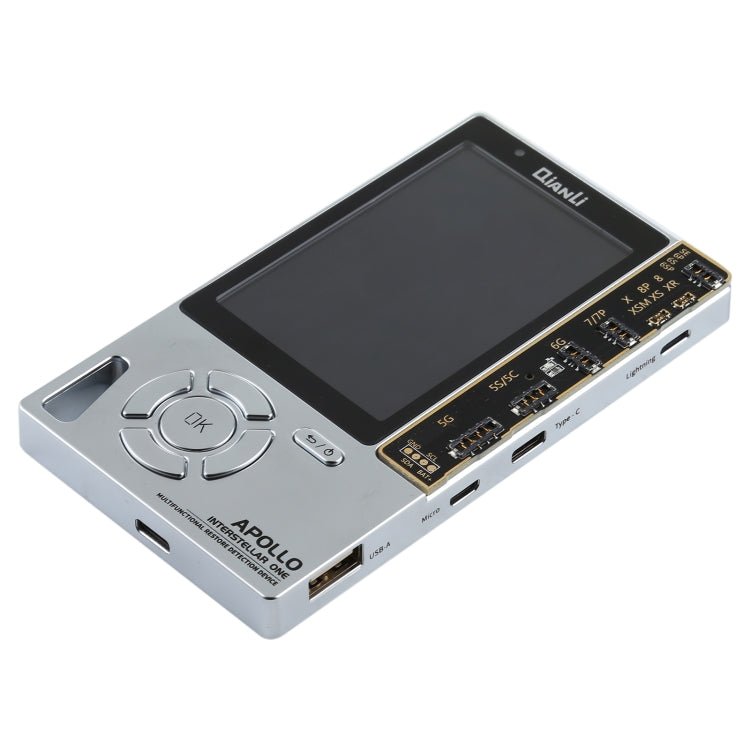
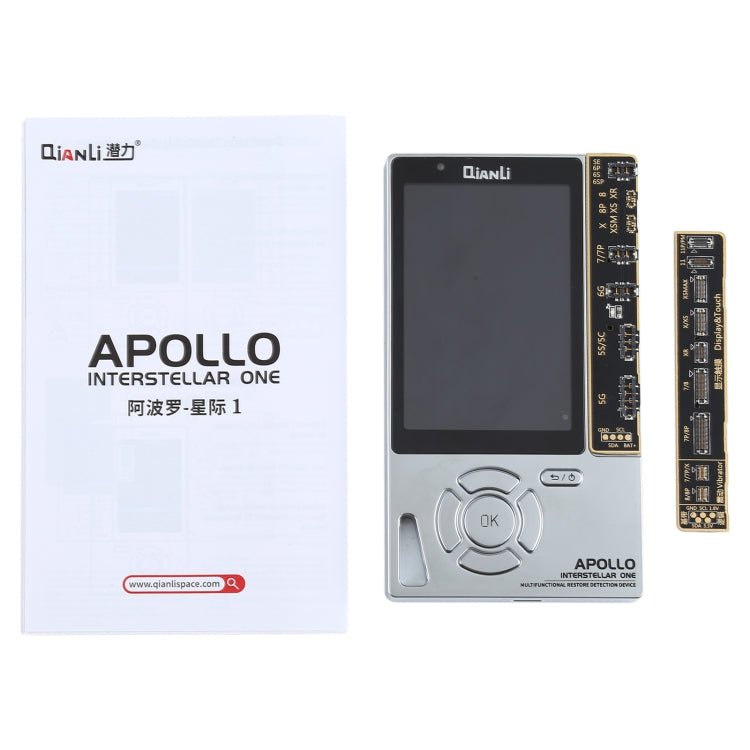
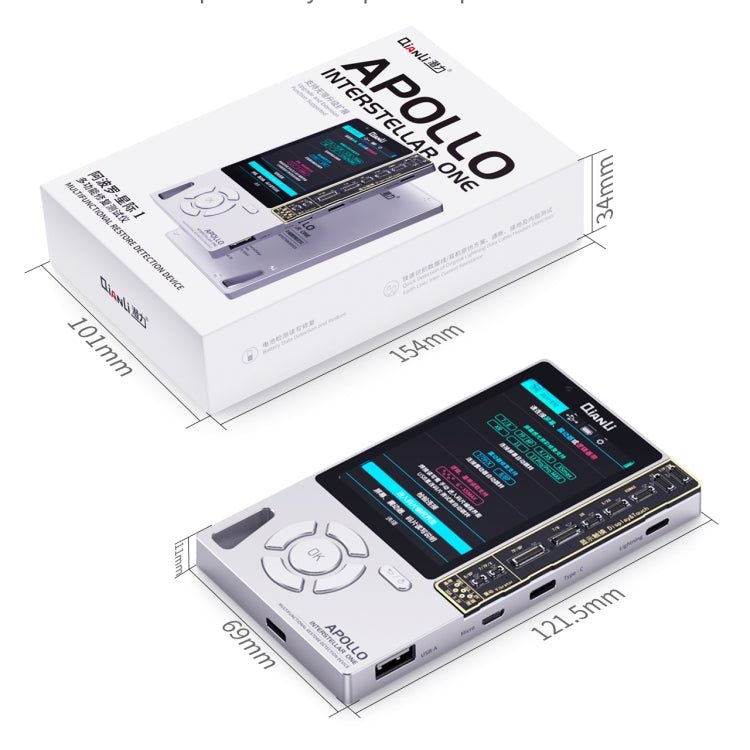
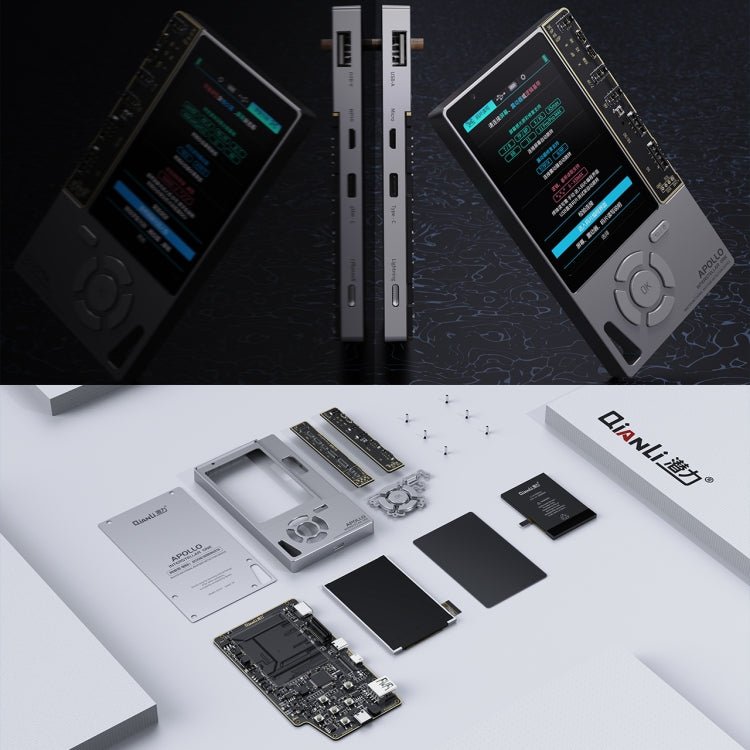
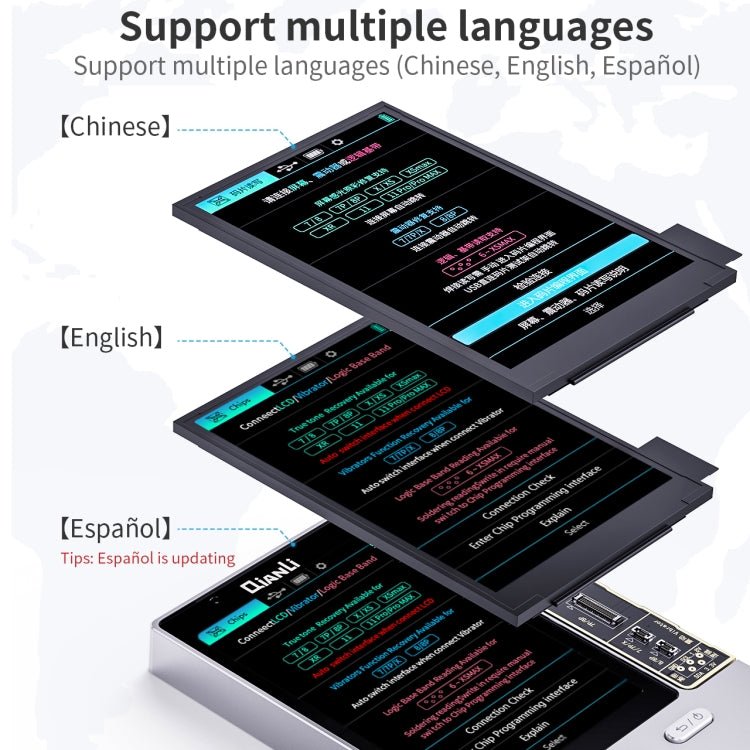
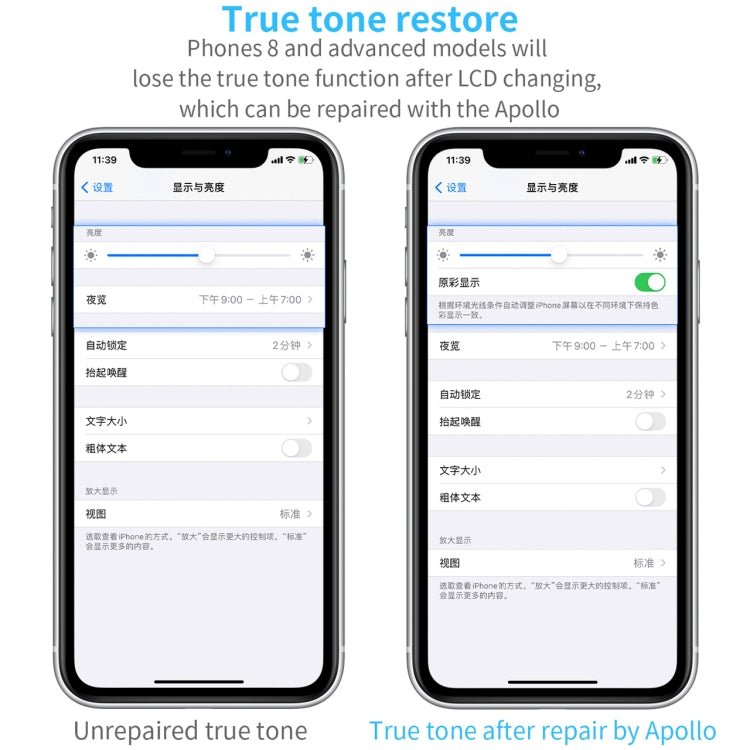
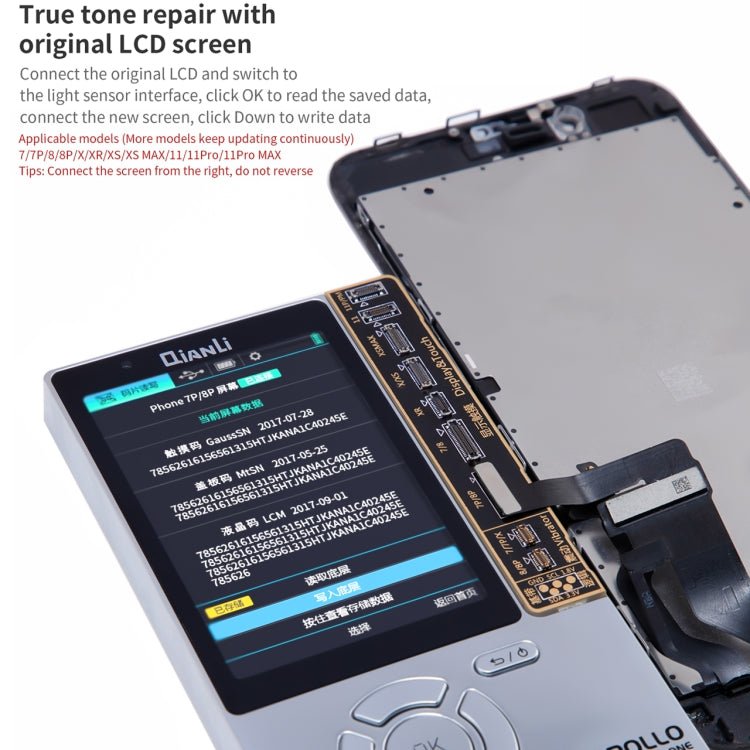
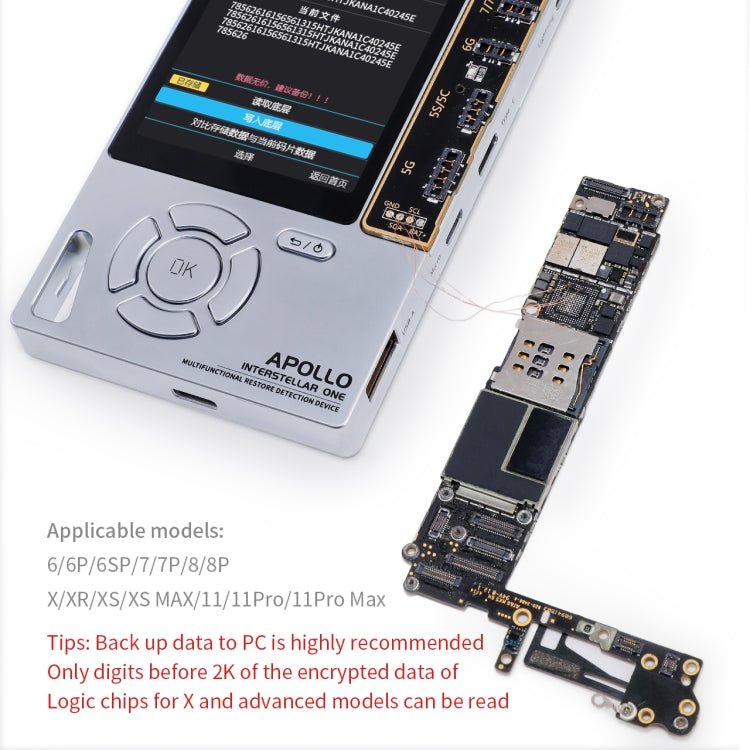
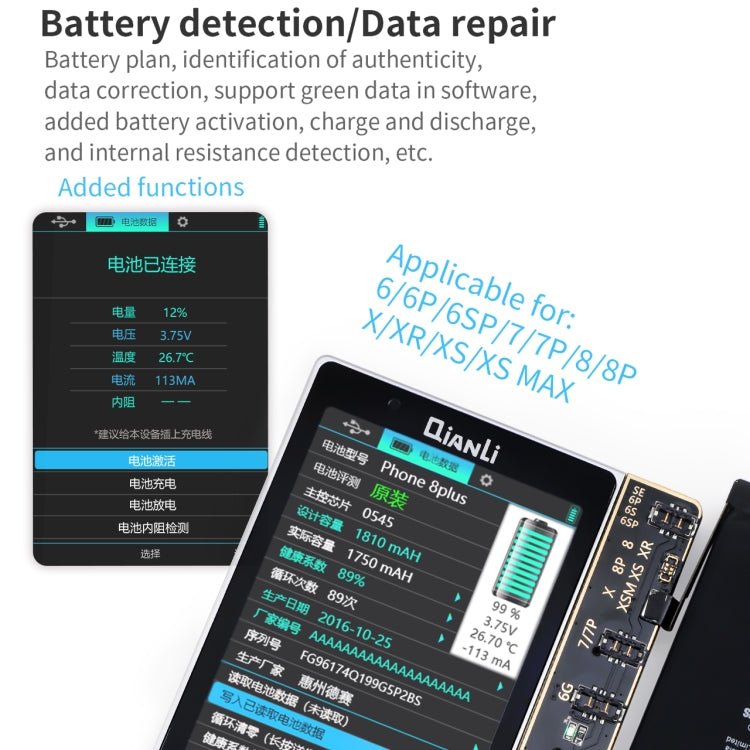
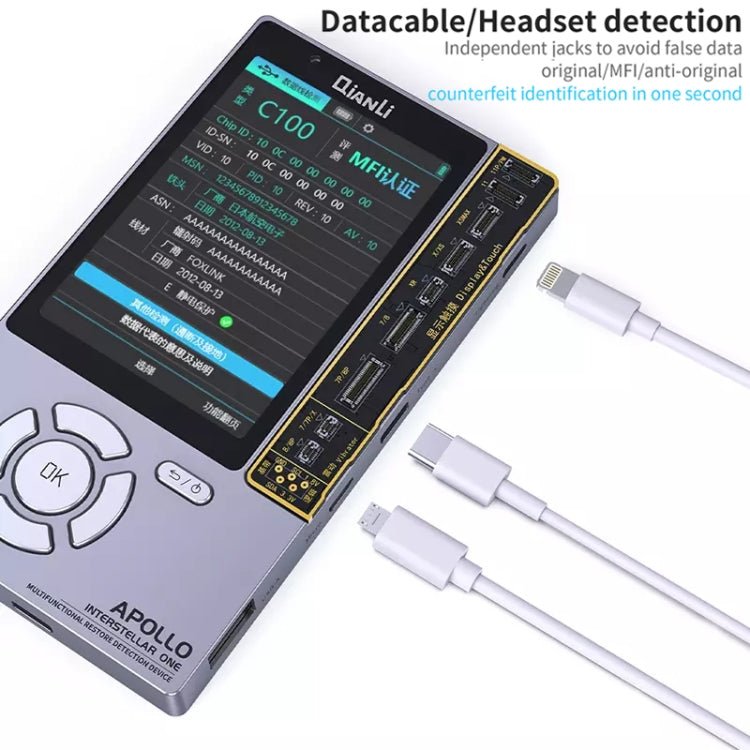
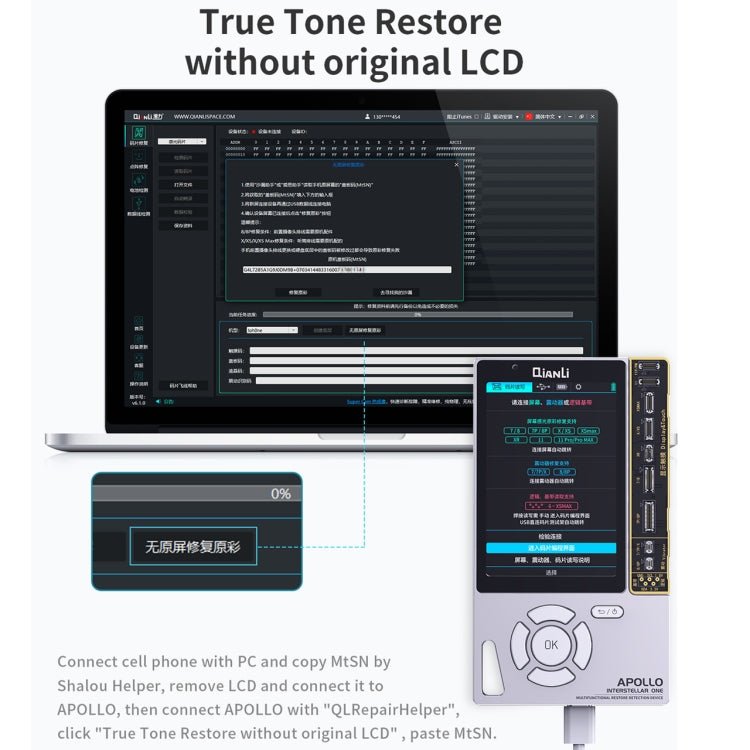
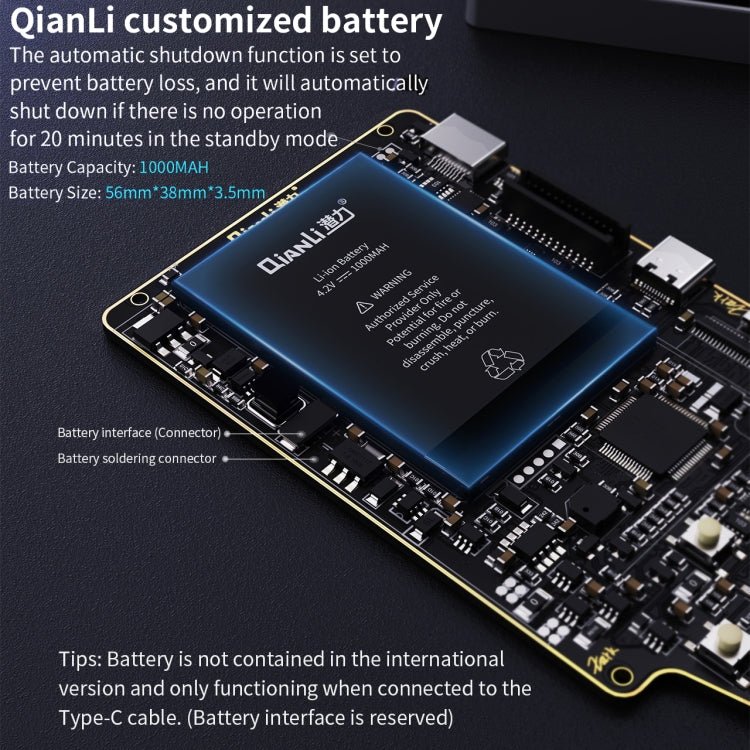
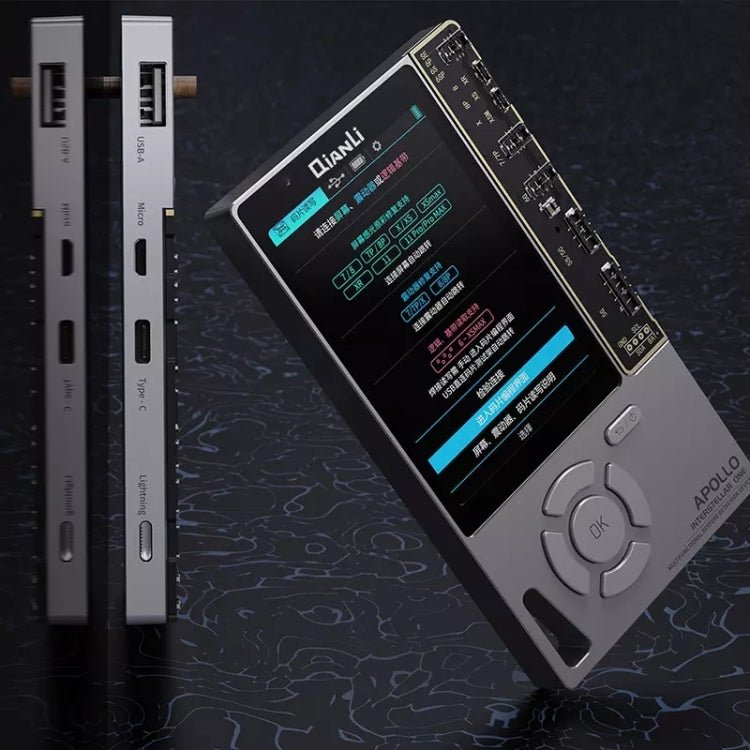
1. Lichtsensor & True Tone Wiederherstellung 2. Datenkabelerkennung 3. Batterie lesen-schreiben & Aktivierung 4. Vibratorreparatur 5. Basisband-Chip lesen und schreiben 6. 6-in-1 multifunktionales Telefonreparaturwerkzeug 7. Unterstützt mehrere Sprachen: Chinesisch, Englisch, Spanisch 8. großes 3,5-Zoll-HD-Display 9. Hinweis: Dies ist eine internationale Version, beinhaltet keine Batterie.
Spezifikation:
Allgemein
Unlike a professional translator who would understand the context and intent of the request, an AI might struggle with nuanced phrases or cultural references. In that case, the AI would likely follow a direct translation approach, which might lead to:
1. **Literal Translation of Idioms and Metaphors:** If the source text contains idioms, the AI might translate them word-for-word, resulting in a German phrase that makes no sense or has a different meaning. A human translator would recognize the idiom and find a German equivalent.
2. **Incorrect Word Choice due to Lack of Context:** Some words have multiple meanings depending on the context. Without understanding the broader context of the entire document, an AI might pick a common meaning that is incorrect for the specific use case.
3. **Grammatical Awkwardness:** While AI has improved significantly, it can still produce grammatically correct but unnatural-sounding sentences, especially with complex sentence structures or when dealing with German's particular word order and case system. A human translator would naturally construct flowing and idiomatic sentences.
4. **Inconsistent Terminology:** If certain technical terms or brand-specific vocabulary appear multiple times, an AI might translate them differently each time if not explicitly instructed to maintain consistency, or if it doesn't have a pre-defined glossary. A human translator would ensure consistent terminology throughout the document.
5. **Missing Cultural Nuances:** Certain phrases or marketing messages might need to be adapted for the German-speaking audience. An AI, lacking cultural understanding, would likely translate directly, potentially losing the intended impact or even causing misunderstandings.
6. **Overly Formal or Informal Tone:** An AI might struggle to maintain a consistent tone (formal vs. informal) that is appropriate for the target audience and the type of document. A human translator would instinctively adjust the tone.
7. **Difficulties with Ambiguity:** If the original English text is slightly ambiguous, a human translator can often resolve this ambiguity by inferring the most likely meaning. An AI might translate the ambiguity directly, passing the problem to the German reader.
In summary, a direct, literal translation from an AI, without the benefit of context and human understanding, would likely be grammatically sound but lack the natural flow, idiomatic expression, and cultural appropriateness that a professional human translator would provide.
Erfahren Sie als Erster von neuen Kollektionen und exklusiven Angeboten.
Business Solutions
Mobile Phone Repair Parts
ORIWHIZ.com wholesale high quality repair parts to repair stores around the world, including: LCD screen, Spare Parts, Back Cover, Batteries, IC Chipsets, Repair tools and Repair consumal materials for iPhone, iPad, iWatch, Mac, Samsung, Xiaomi, Huawei, Motorola, Google, LG, Infinix, Sony, Meizu, etc.
ORIWHIZ is a professional team to help buyers around the world to design their own brand mobile phone accessories, customize packing with low MOQ and wide range of sourcing from data cables, plug chargers, earphones, power bank, speakers, etc.
ORIWHIZ have rich experiences in helping purchasers to source and develop different kinds of products in China, from sampling to shipping supply chain control, from price negotiation to target achievement, we assit your business to be better.